Walking Programme
The Four-Week Walking Routine for Building a Daily Movement Habit
Tobias Ashcroft·11 min read
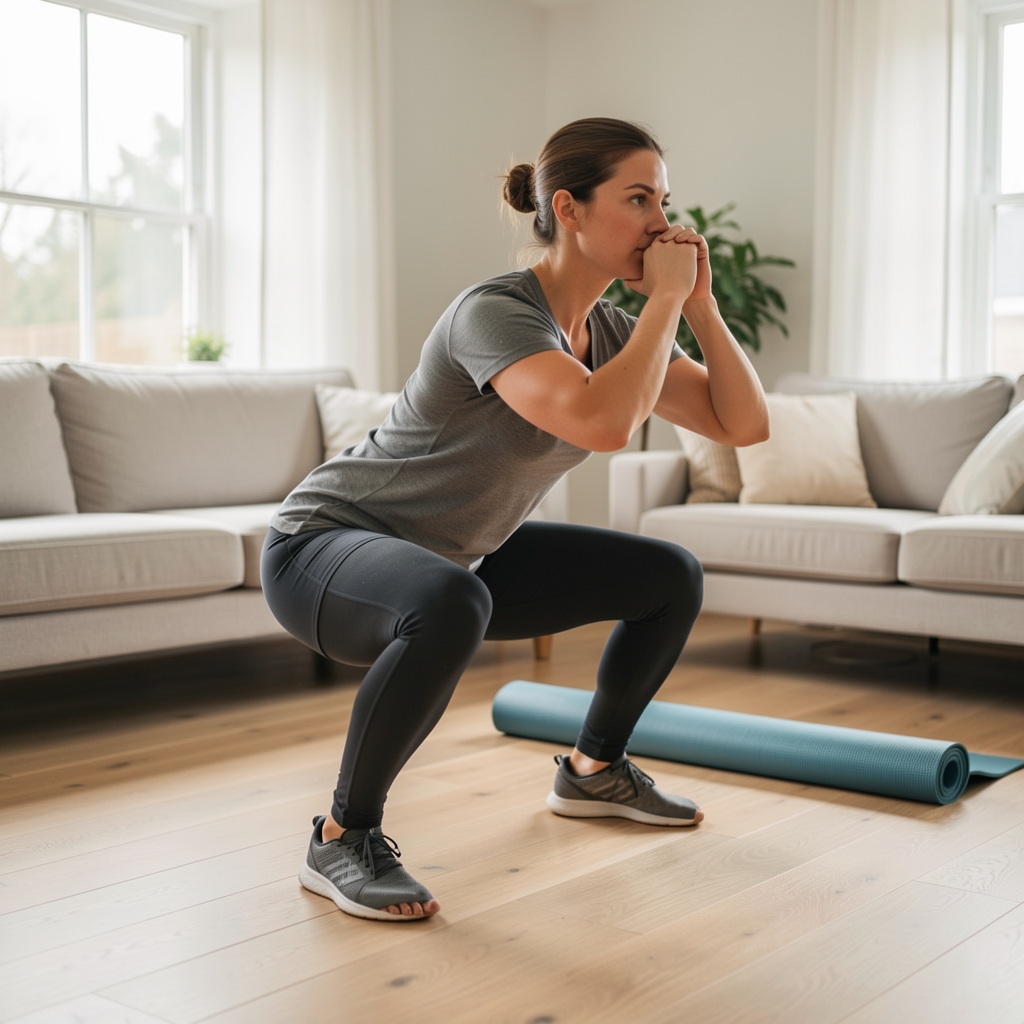
The phrase strength training carries a particular freight for those encountering it for the first time. It conjures images of weighted bars, mirror-lined rooms, and a vocabulary of sets, reps, and progressive overload that can feel — before any session has occurred — like a language barrier rather than an invitation. What gets lost in that framing is a quieter truth: the body is its own most accessible piece of equipment, and the movements it performs naturally can constitute a systematic and graduated approach to building foundational strength.
This article sets out the core bodyweight movements recommended for beginners, explains the reasoning behind each, and offers a practical framework for the first four weeks of a home-based routine. No equipment is required. A training mat and comfortable footwear will assist, but neither is essential to begin.
Resistance exercise using one's own bodyweight engages the same fundamental movement patterns as equipment-based training — squatting, hinging, pushing, pulling — but removes the variable of external load from the equation. For a beginner, this is not a limitation but an advantage. Without the additional weight, attention can be directed toward understanding the shape of each movement: where the effort should be felt, which joints are involved, and what correct alignment looks and feels like.
Published frameworks in exercise science consistently support bodyweight training as a valid and effective entry point for new movers. Research published in peer-reviewed sports science journals indicates that beginners can achieve significant improvements in muscular endurance, functional mobility, and cardiovascular capacity through structured bodyweight programmes — particularly in the first eight to twelve weeks, when the body is adapting to the novel stimulus of regular exercise.
The psychological dimension should not be overlooked either. Completing a session that uses only the body's own mass removes the procurement barrier of equipment and the logistical barrier of a gym membership. The session can happen at home, in a garden, or in any space large enough to extend both arms without striking furniture.
A well-structured beginner bodyweight programme addresses the six fundamental movement categories. The following notes describe each movement, explain its purpose, and offer guidance on common form errors.
The squat is the foundational lower-body movement. Stand with feet hip-width apart, toes pointing slightly outward. Lower the hips by bending the knees and hips simultaneously, as though sitting back into a chair. The aim is to lower until the thighs are parallel to the floor, though beginning at a quarter-squat depth and progressing over several sessions is entirely appropriate. The chest should remain upright; the knees should track in line with the toes throughout.
The most frequent form error in new movers is allowing the knees to collapse inward at the bottom of the movement. If this occurs, reduce the depth of the squat until the pattern can be held correctly. Depth is not the primary goal; correct alignment is.
The push-up addresses the upper body pushing pattern. Begin in a high plank position — hands placed shoulder-width apart, body forming a straight line from heels to crown. Lower the chest toward the floor by bending the elbows, then press back to the start. If this full range of motion is not accessible, the same pattern performed on the knees is a direct regression that builds the same strength in the same muscle groups.
The common error is allowing the hips to sag toward the floor, which shifts the demand away from the chest and arms and places load on the lower back. The plank position should be maintained throughout each repetition.
The plank is an isometric hold that develops the capacity to stabilise the trunk under load. It is not an abdominal exercise in isolation — it engages the shoulders, hips, and legs as well. The position: forearms on the floor, elbows beneath the shoulders, body forming a rigid line. Hold for a count of twenty to thirty seconds initially, progressing toward sixty seconds as capacity develops.
The glute bridge targets the posterior chain — the muscles of the lower back, hips, and legs. Lie on the back with knees bent and feet flat on the floor. Drive through the heels to raise the hips until the body forms a straight line from knees to shoulders. Lower with control. This is a gentle but effective movement that reinforces the hip extension pattern used in walking and stair-climbing.
The upper body pulling pattern is the one most difficult to address without any equipment. A functional approximation is the door-frame row: stand facing a door frame, grip both sides at chest height, lean back so the arms are extended, then pull the chest toward the frame. The degree of lean governs the difficulty. This exercise addresses the back and biceps and provides muscular balance to the push-up.
Using a sturdy step, stair, or low platform, step one foot up, drive through the heel to bring the whole body onto the step, then lower with control. This single-leg pattern builds strength and coordination and directly transfers to the demands of everyday movement.
The following framework assumes two to three sessions per week, with at least one rest day between sessions. Each session takes approximately twenty to thirty minutes.
The increase in volume from week to week is deliberate and modest. A consistent ten-percent increase in weekly volume is broadly supported by published beginner frameworks as the upper threshold for sustainable progression. Exceeding this rate tends to produce the kind of soreness that discourages subsequent sessions.
Rest days are not passive. The physiological adaptation that produces strength occurs during recovery, not during the session itself. A session creates a stimulus; rest allows the body to respond to it. New movers frequently undervalue rest, associating inactivity with lack of commitment. In practice, the opposite tendency — exercising every day without adequate recovery — is the more common barrier to sustained progress in the first month.
Active rest — a gentle walk, light stretching, a ten-minute mobility session — is appropriate on non-training days for those who find complete inactivity difficult to sustain psychologically.
The most effective beginner programmes are those that become habitual rather than exceptional. Habit-stacking — attaching the session to an existing daily anchor point, such as a morning coffee routine or the end of a working day — is a widely discussed mechanism for increasing adherence. The session does not need to be long. A twenty-minute commitment, three times per week, represents a cumulative total of approximately one hour of structured movement across seven days: a modest investment in daily activity that, maintained consistently over eight to twelve weeks, produces observable and meaningful change in capacity.
Milestone tracking — a simple log of session dates, movements performed, and any notes on how the session felt — provides a record that is motivating to review after several weeks. The pattern of consistency, rather than any single session's performance, is what most clearly predicts long-term engagement with an active lifestyle.
We recommend speaking with a qualified wellness or nutrition professional before introducing any new habit or routine to your daily life, particularly if you have specific requirements or concerns about your current level of physical readiness.

Eleanor Whitfield is the primary editor of Taloven Dispatch. Her writing draws on published exercise science and a long-standing interest in the practical barriers that new movers face when establishing an active routine.
More from this author →